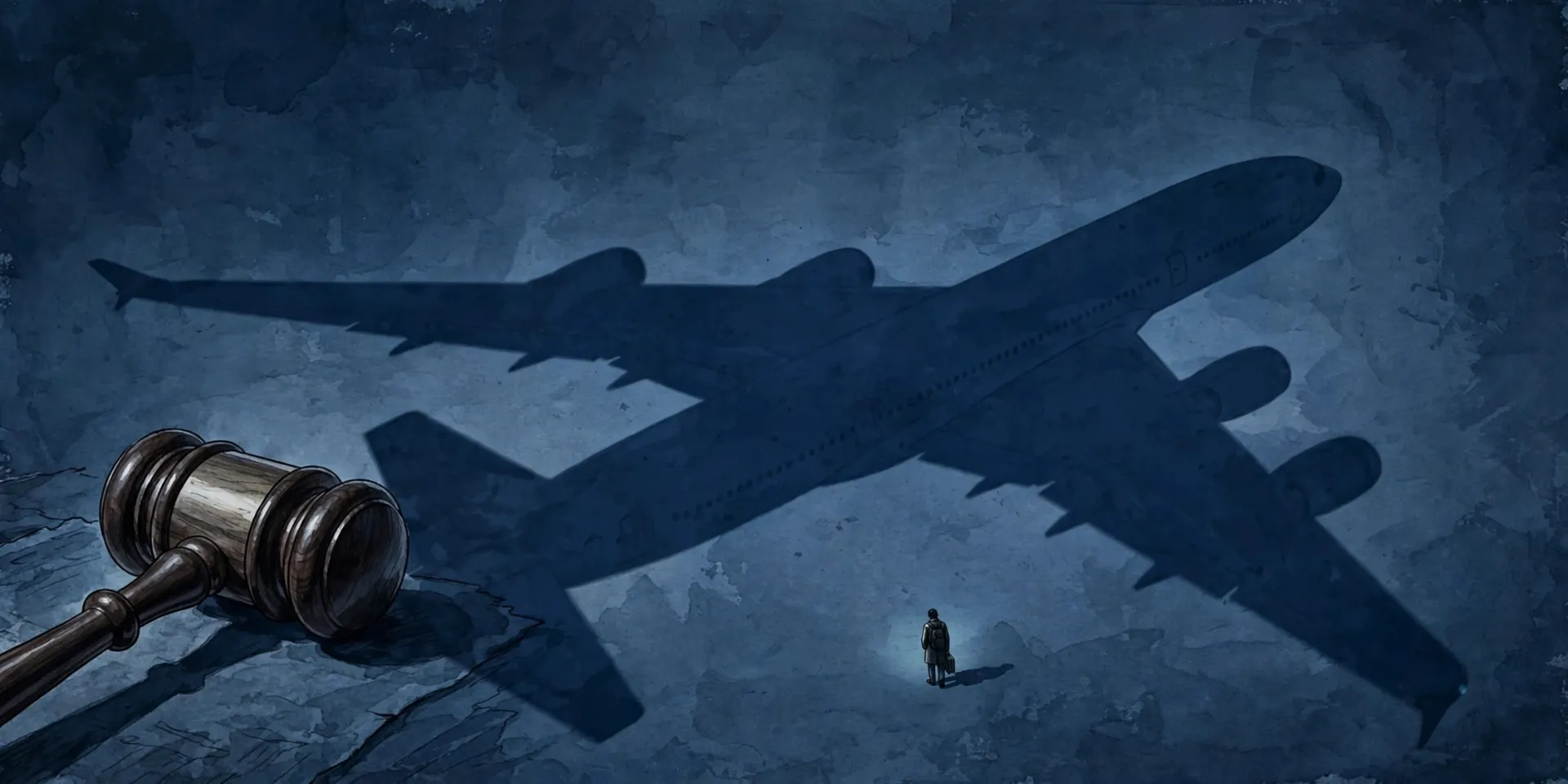
Your flight complaint may soon be decided by a private judge the airline picks
Bill C-31 would move air passenger complaints to private adjudicators hand-picked by the airlines — with binding decisions. Senate witnesses say no comparable country does this. The Senate reports October 9: this is the week to be heard.
If you have filed a complaint with the Canadian Transportation Agency, you already know the wait. The Agency's backlog now stands at roughly 98,000 air travel complaints. Passengers wait years for decisions while the queue grows faster than it shrinks. On that much, everyone agrees: the system is not working.
Ottawa's answer is Bill C-31, now before Parliament. It is not more public decision-makers. It is privatization.
Under the bill, complaints move from the Agency to the Minister of Transport. The government could then suspend the public process and route complaints to "designated persons" — private dispute-resolution companies. Read the design carefully: the airline chooses its adjudicator from a government-approved list. The airline pays the adjudicator's costs. The decision binds you.
The company you are complaining about picks — and pays — your judge.
At Senate committee hearings this month, the model has been taken apart by the people who know it best. University of Ottawa law professor Paul Daly said it should be "viewed with suspicion." Dr. Gábor Lukács, president of Air Passenger Rights, testifying before the Senate transport committee on September 23, named the machinery: proposed clause 85.21 lets airlines hand-pick the adjudicators who decide passenger complaints, and proposed clause 85.24 makes those decisions binding on passengers — a combination he called "illusory, ineffective, unfair to passengers and unprecedented in the Western world." Pressed on the conflict of interest, he said no code of conduct fixes a system that "still would allow some form of judge shopping," since no party should get to choose its judge. And on the backlog argument at the heart of the bill: "What this is doing is swapping decision makers and hoping that, miraculously, those decision makers will work faster, but that is an illusion." His proposed remedy is the European norm the bill claims to follow: decisions binding on the carrier but not the passenger, who stays free to reject the outcome and go to court — the same design as Canada's telecom complaints body, the CCTS. Bill C-31 has none of that superstructure. There is no reject-and-walk-away. There is a private decision, made by a decision-maker selected and funded by one of the parties, and it is final.
Nor is this hypothetical. In April 2026, Air Canada quietly began routing passenger complaints to an external arbitration firm — a subsidiary of the UK-based CDRL Group — in a voluntary pilot funded by the airline itself. Bill C-31 would take that experiment and make it the system.
To be fair, the bill contains real improvements, and passengers should know about them. It repeals the rule that has for three years forbidden passengers from speaking publicly about their own complaints — a gag that never belonged in a consumer-protection scheme. It requires airlines to pay ordered compensation within 30 days. And it raises maximum fines for systemic violations of the passenger-protection regulations to $1 million. Earlier this year the Agency fined Air Canada $426,000 over its treatment of passengers during the August 2025 strike; under the new ceiling, that kind of pattern would cost far more.
But a faster wrong answer is not justice. A backlog is an argument for funding the public system until it works — not for auctioning the system to the industry it regulates. Passengers did not create this backlog by complaining too much. They created it by being mistreated at scale, and then being handed a process too small to answer them.
The bill is in committee right now. The Senate transport committee studying it reports by October 9, 2026, and because of a ruling in the House of Commons, the complaints overhaul can be voted on separately from the rest of the budget bill. That means this is a genuinely live question — and this is the week to be heard on it. If you care about who decides your complaint, tell your member of Parliament and the Senate committee.
SkyGuard is following Bill C-31 clause by clause. We will publish updates when developments actually change your rights — and we will say so plainly when they don't.