News
Court decisions, regulation changes, and what they mean for Canadian travellers.
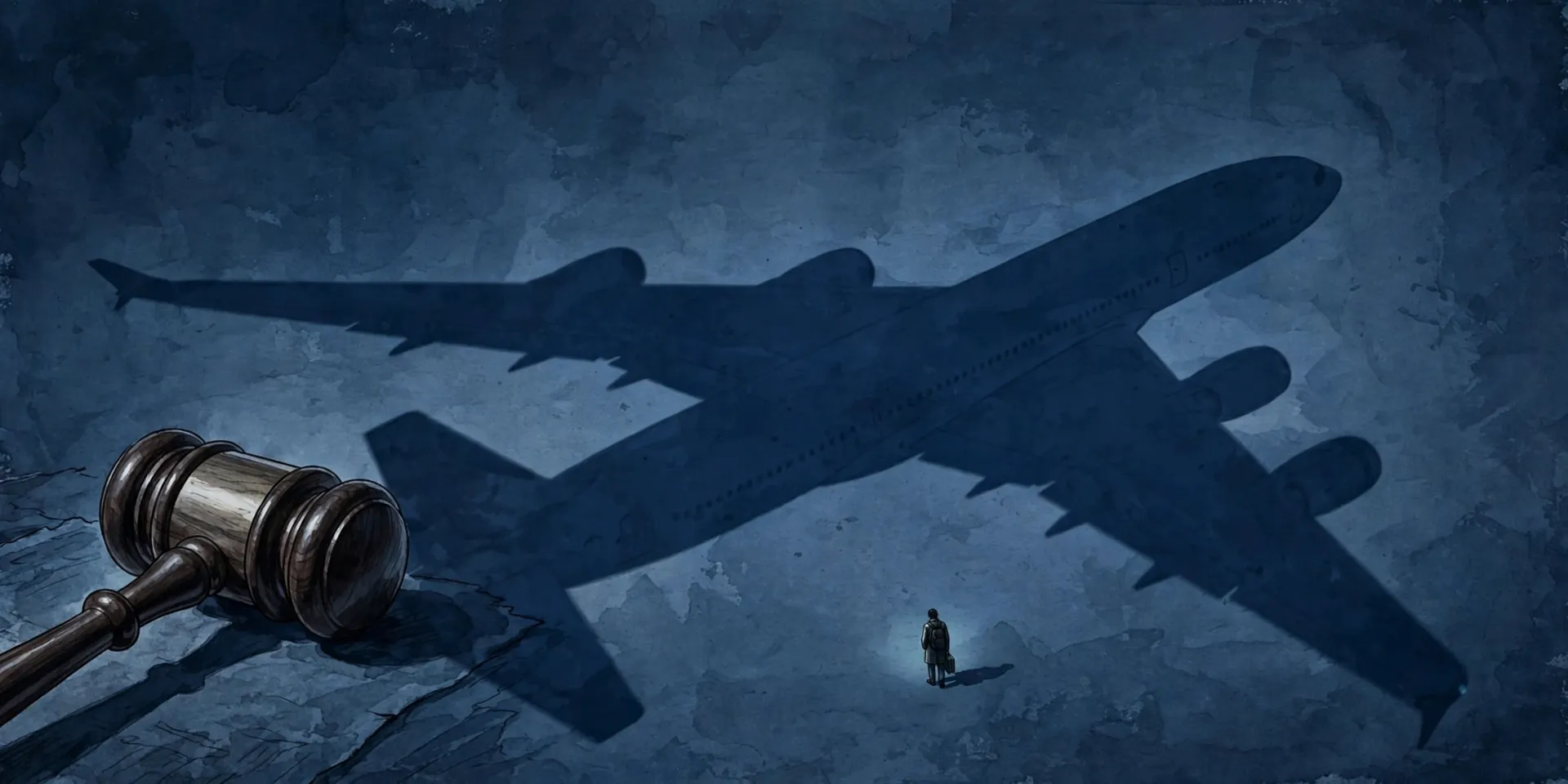
Your flight complaint may soon be decided by a private judge the airline picks
Bill C-31 would move air passenger complaints to private adjudicators hand-picked by the airlines — with binding decisions. Senate witnesses say no comparable country does this. The Senate reports October 9: this is the week to be heard.
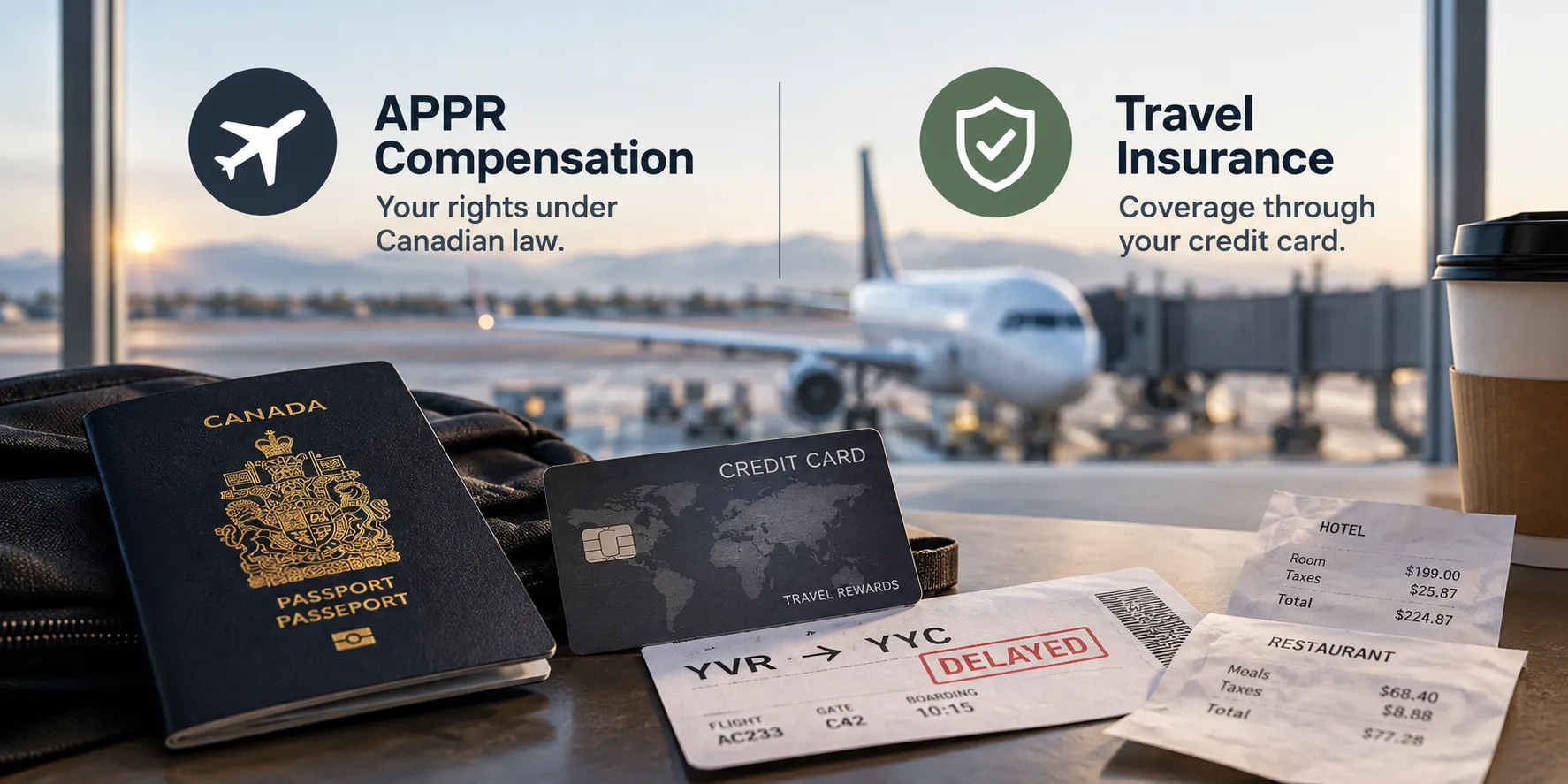
APPR Compensation and Travel Insurance: Different Rights, Different Claims
APPR compensation and travel insurance are different legal remedies. A passenger may have rights against the airline, the insurer, or both, depending on the disruption, the losses incurred, and the wording of the insurance policy.
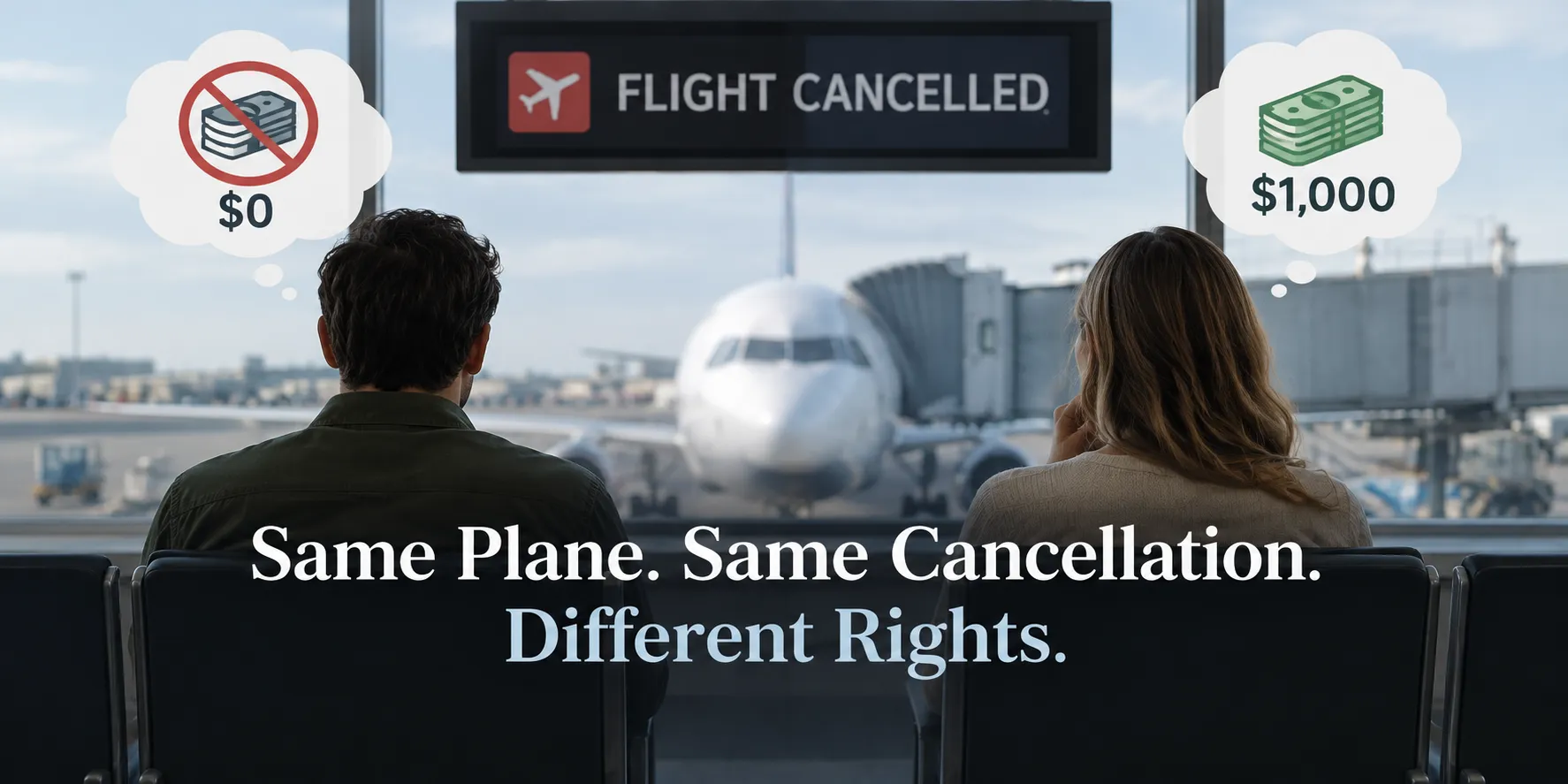
Same Plane. Same Cancellation. Different Rights.
Two passengers can experience the same airline cancellation and still have different rights under the APPR. The difference may turn on whether the cancelled flight was on the passenger’s original ticket or was a replacement flight after an earlier disruption.
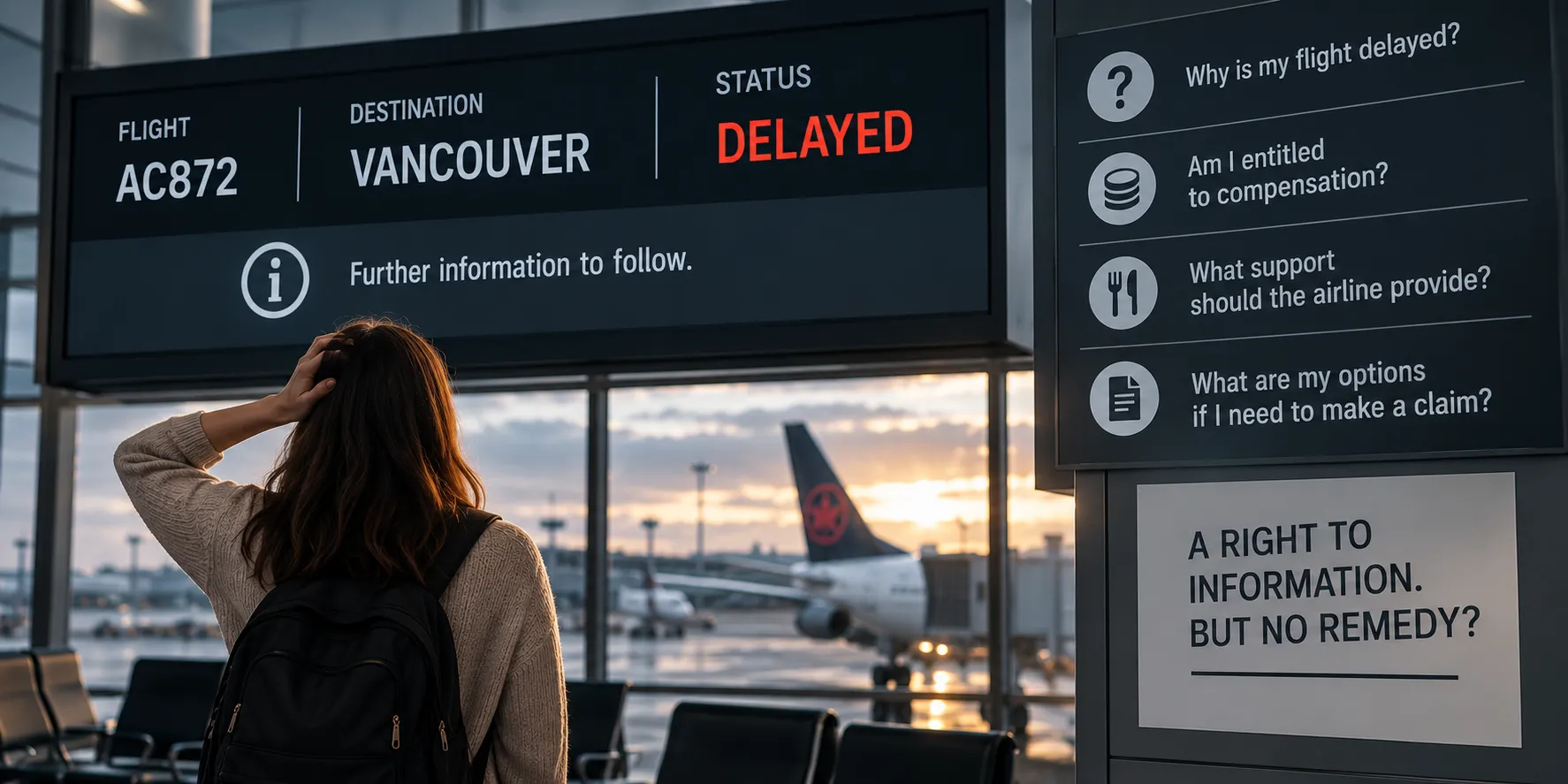
A Right to Information, But No Remedy: What Happens When Airlines Ignore Section 13
Section 13 of the APPR requires airlines to explain disruptions, provide regular updates, and tell passengers about compensation, treatment and recourse. But when airlines fail to provide that information, the passenger may have no automatic remedy for the breach itself.
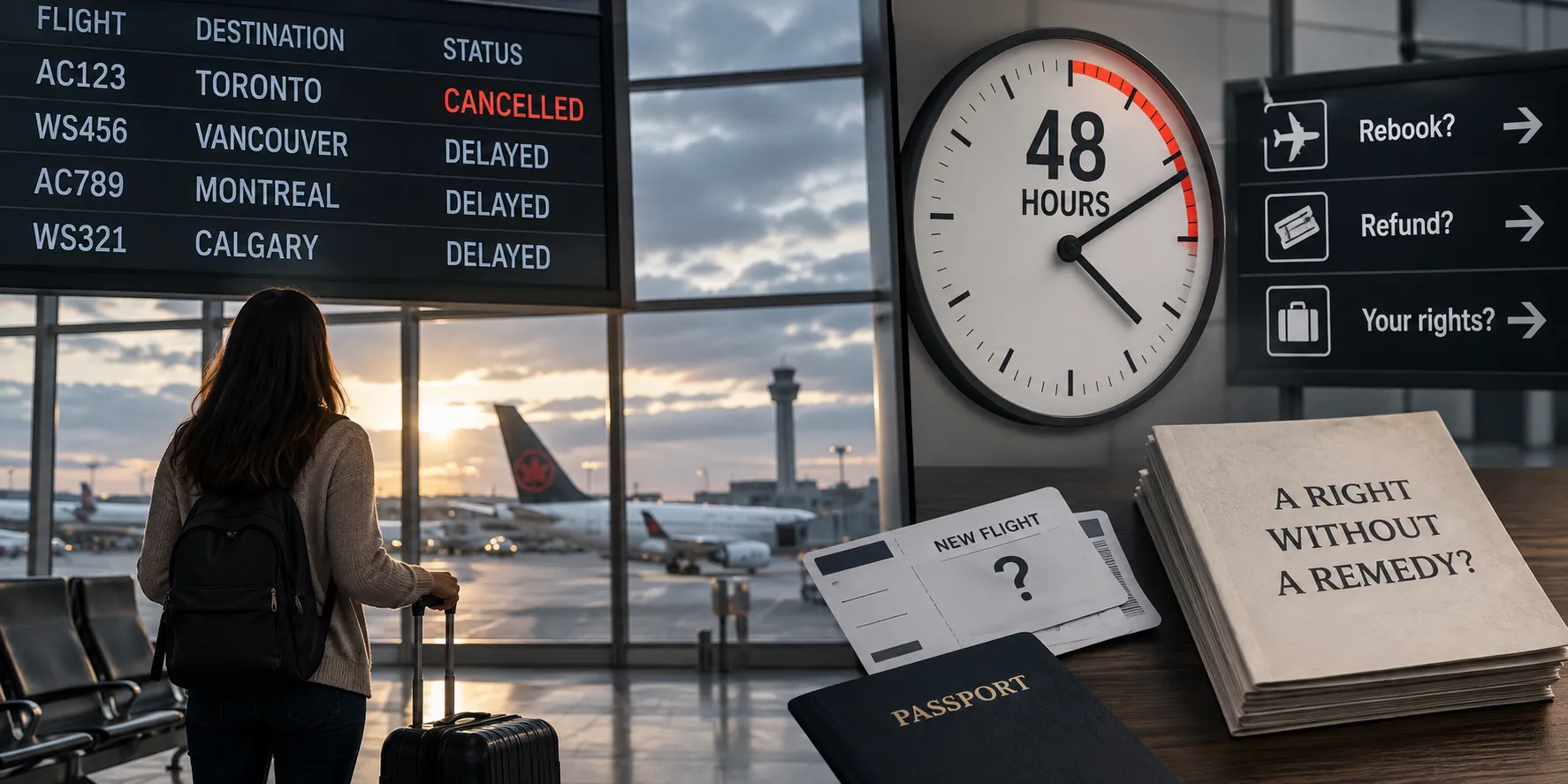
A Right Without a Remedy: What Happens When Airlines Miss the 48-Hour Rebooking Deadline.
The APPR requires airlines to rebook passengers within specific timeframes, including looking to other carriers in some cases. But when an airline fails to do so, the regulations provide no automatic compensation for the breach itself.
Can You Sue an Airline in Small Claims Court in Canada?
Yes, Canadian passengers may be able to sue an airline in provincial small claims court or a civil tribunal. This article explains when that option is available, how APPR compensation differs from damages, and what to consider before choosing a forum.
When the Process Becomes the Defence
Air passenger rights mean little if enforcing them costs more in time, money, and effort than the claim is worth. This article examines how delay, complexity, information asymmetry, and procedural attrition can shape APPR disputes long before a decision is reached.
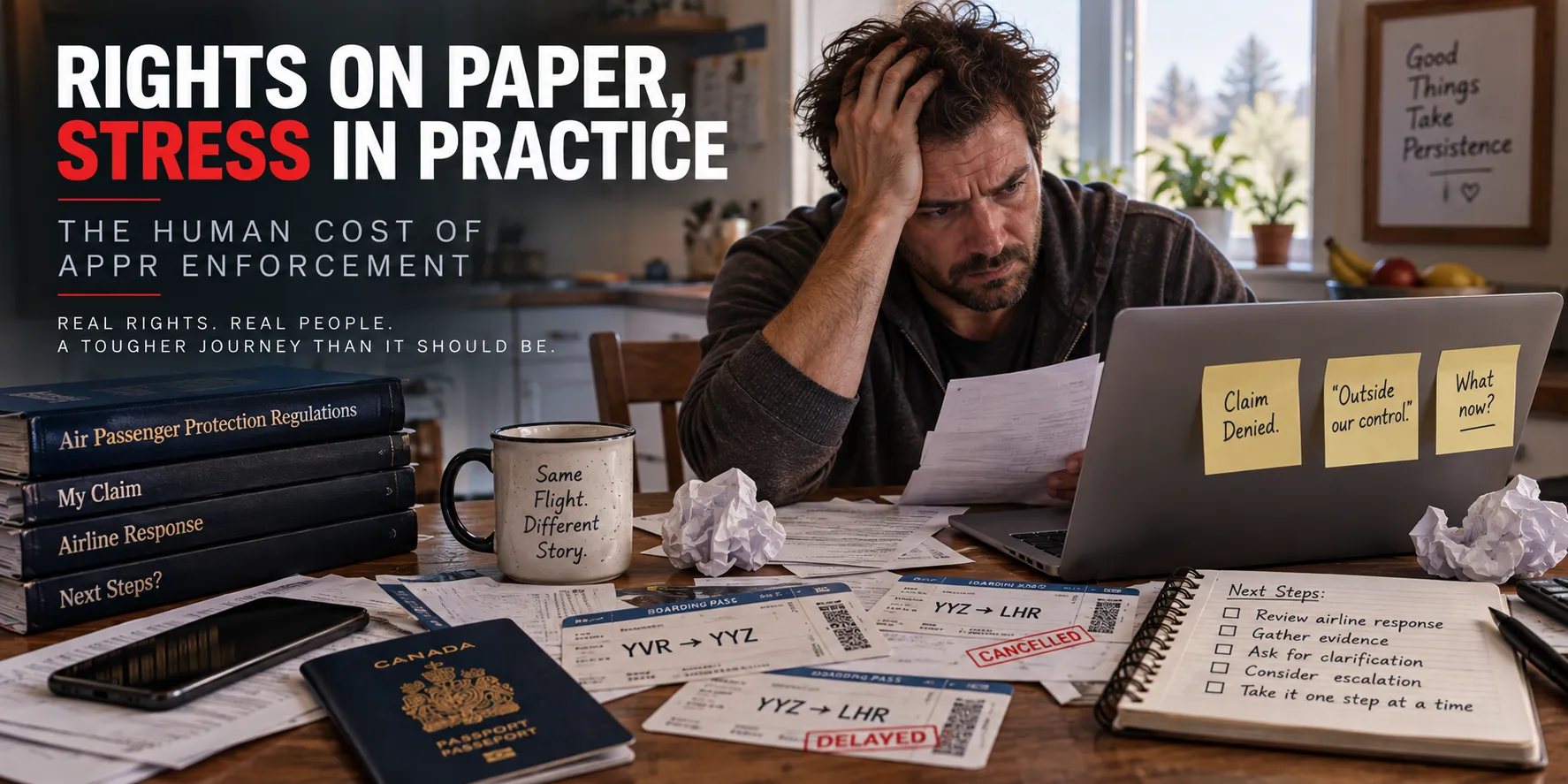
Rights on Paper, Stress in Practice: The Human Cost of APPR Enforcement
Canada’s air passenger rights may look straightforward on paper, but enforcing an APPR claim can demand time, persistence, organization and emotional energy. This article examines the human cost of a claims-based compensation system and why passengers should approach enforcement one step at a time.
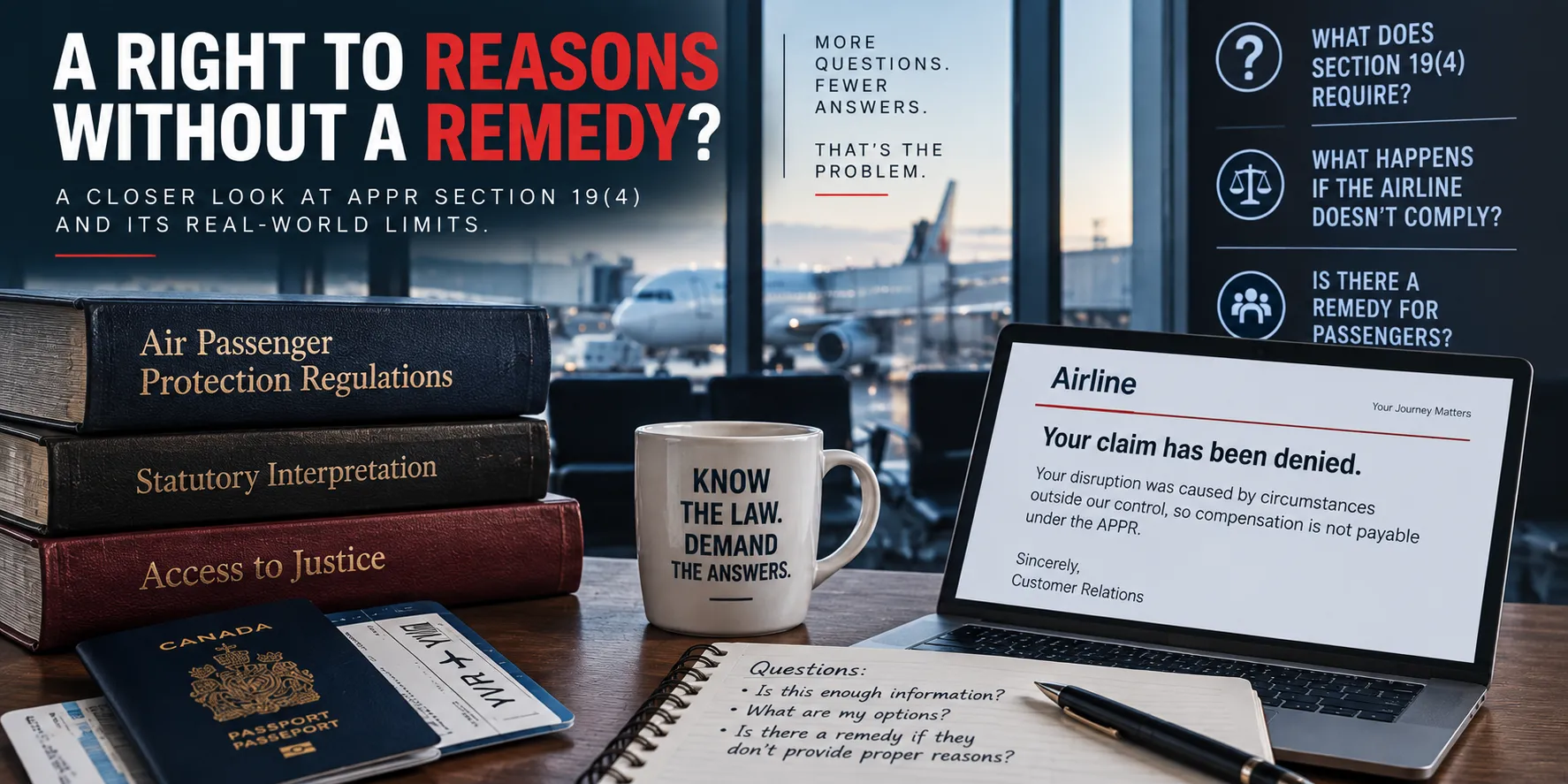
A Right to Reasons Without a Remedy? The Practical Weakness of APPR Section 19(4)
APPR s. 19(4) requires airlines to explain why compensation is not payable, but the passenger receives no automatic private remedy when that obligation is breached. This article examines why that gap weakens one of the APPR’s most important consumer protections.
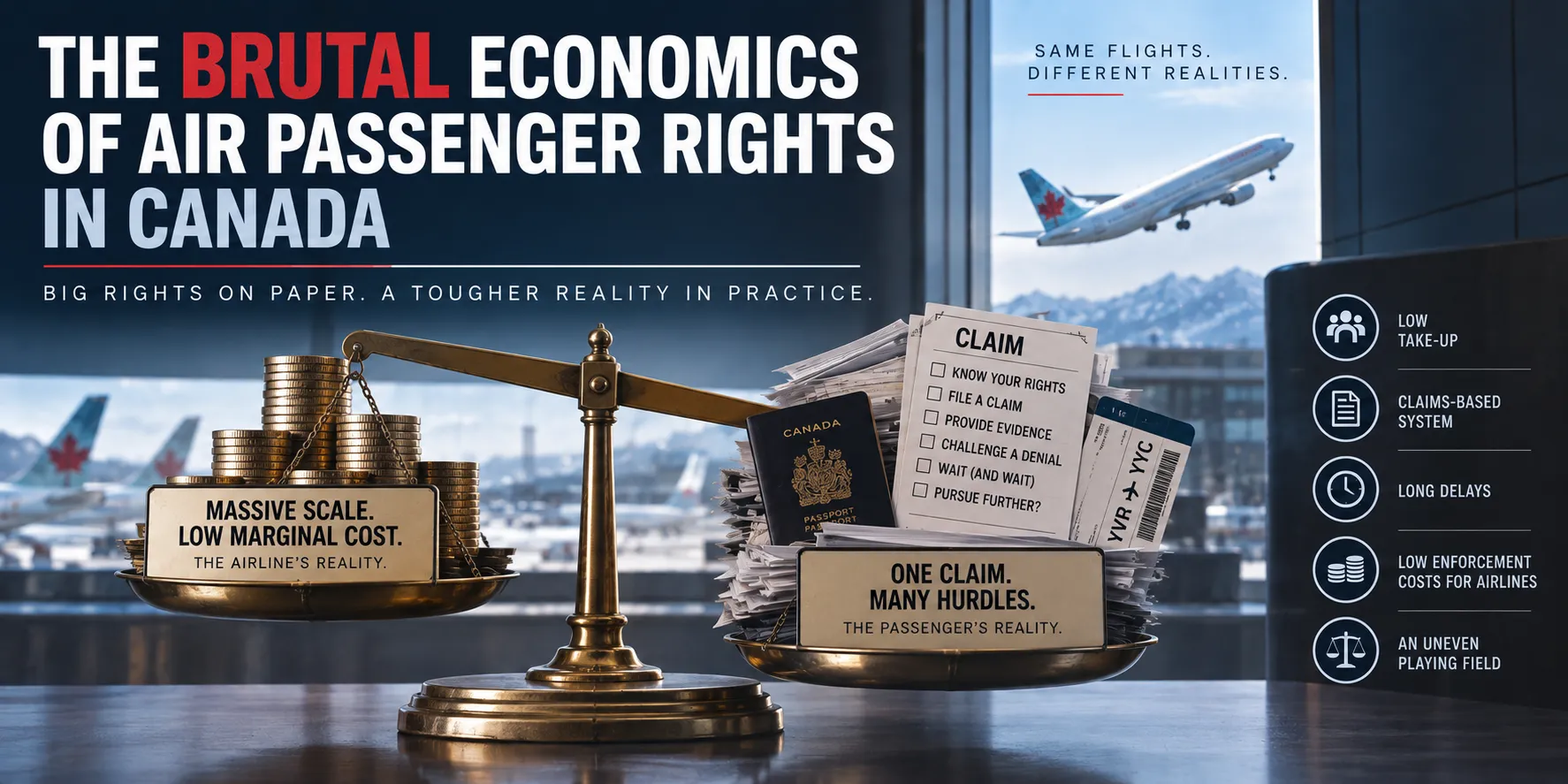
The Brutal Economics of Air Passenger Rights in Canada
Canada’s air passenger rules promise meaningful compensation, but the real economics favour airlines when passengers must identify, claim, challenge, and enforce their own rights. This article examines how friction, information imbalance, delay, and low follow-through can reduce the real cost of APPR claims.
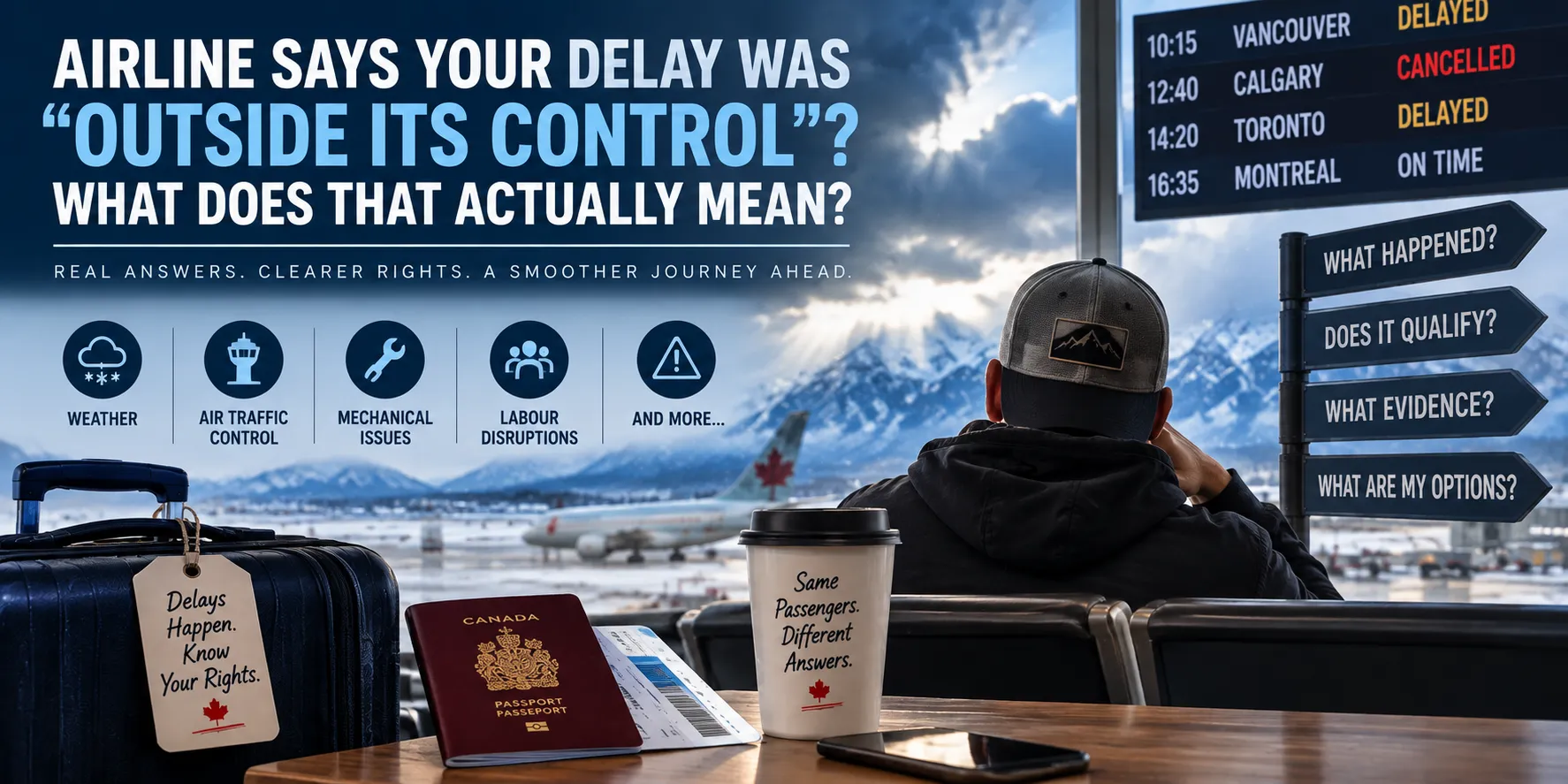
Airline Says Your Delay Was “Outside Its Control”: What Does That Actually Mean?
Airline says your delay was “outside its control”? Learn what that phrase actually means under the APPR, which events can qualify, how earlier disruptions matter, and what questions to ask before accepting a denied compensation claim.
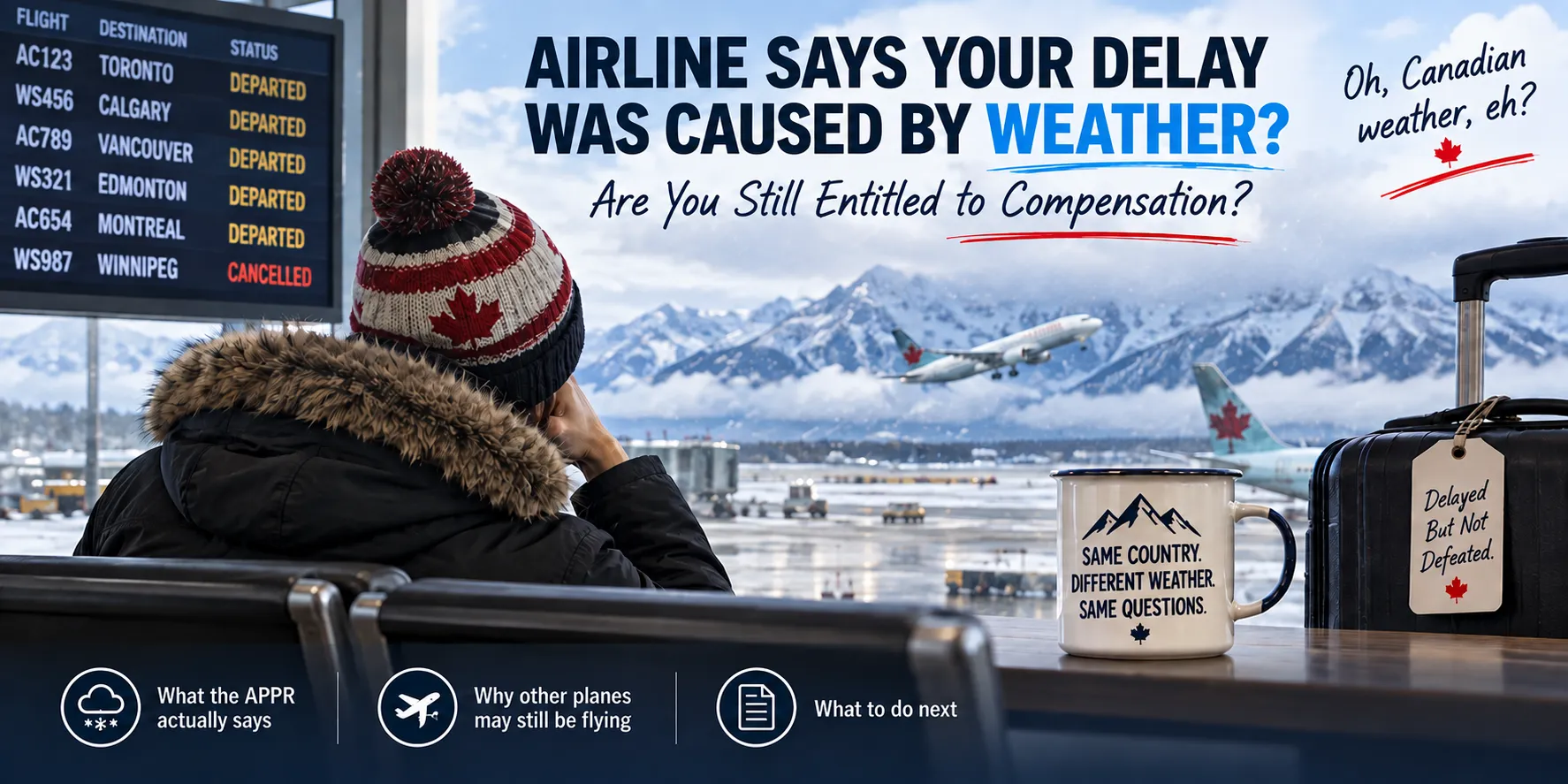
Airline Says Your Delay Was Caused by Weather: Are You Still Entitled to Compensation?
Airline says your delay was caused by weather? Learn what the APPR actually requires, why other planes may still be flying, and what questions to ask before accepting a denied compensation claim.
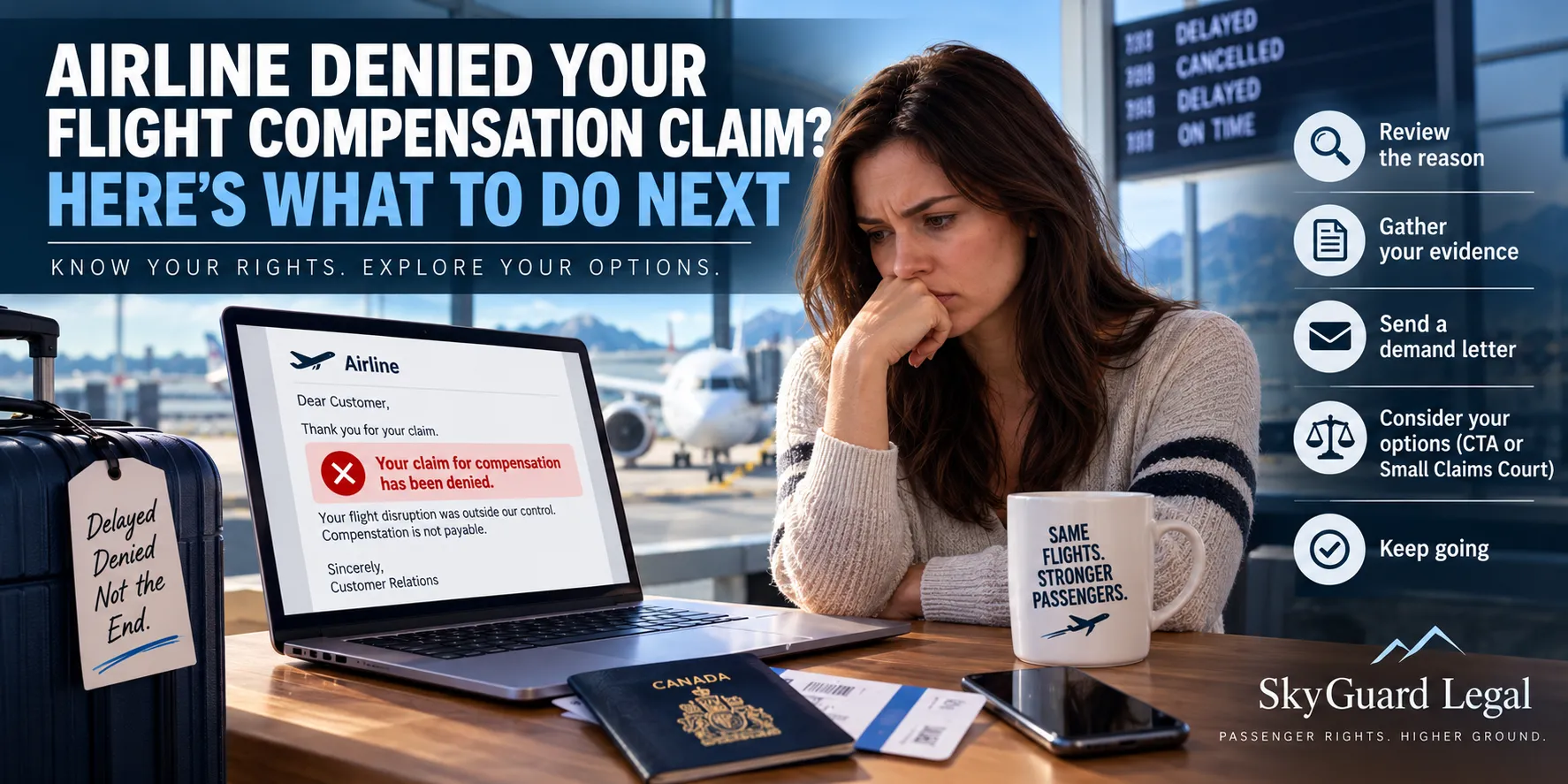
Airline Denied Your Flight Compensation Claim? Here’s What to Do Next
Airline denied your flight compensation claim? Learn how to assess the reason, preserve evidence, challenge vague explanations, and decide whether to pursue the claim through Small Claims Court, a provincial tribunal, or the CTA.
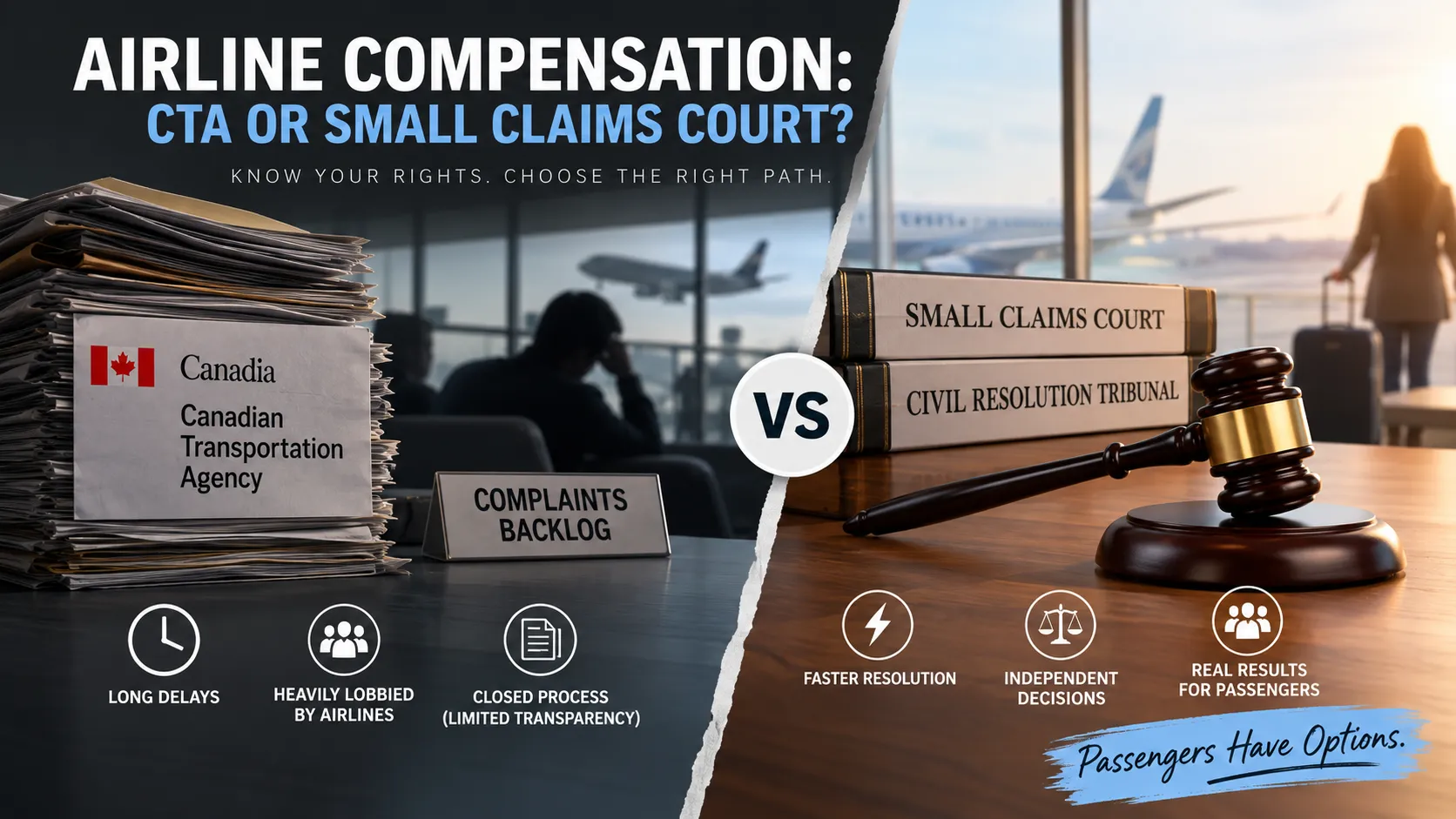
Why We Often Recommend Small Claims Court or a Tribunal Instead of the Canadian Transportation Agency
When an airline denies a valid passenger claim, the Canadian Transportation Agency is not necessarily your only—or your best—option.
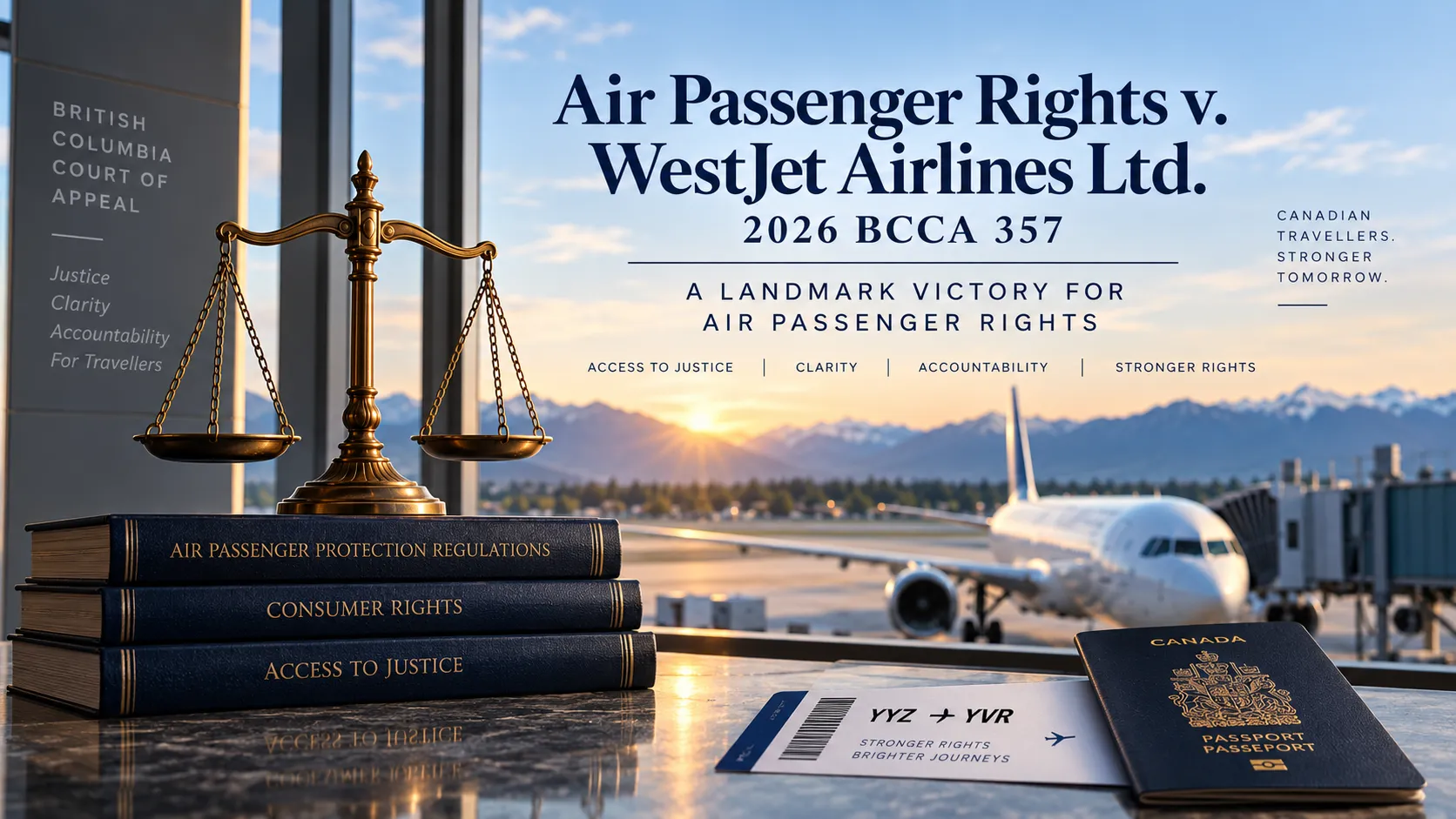
Air Passenger Rights v WestJet (2026 BCCA 357): A Landmark BC Court of Appeal Decision
In a landmark decision, the British Columbia Court of Appeal has dramatically reshaped Canadian air passenger rights. In Air Passenger Rights v. WestJet Airlines Ltd., 2026 BCCA 357, the Court confirmed that standardized compensation claims under the Air Passenger Protection Regulations may be pursued before the Civil Resolution Tribunal and rejected arguments that only the Canadian Transportation Agency can decide these disputes. While the particular passengers ultimately did not receive compensation, the judgment represents a major victory for access to justice and clarifies several important questions that will benefit Canadian travellers for years to come.

✈️ SkyGuard Legal: Justice in Motion for Canadian Air Passengers
We believe every traveller has the right to clear information, timely compensation, and transparent accountability when things go wrong.